Frauscher Sensor Technology has completed the divestiture to Wabtec Corporation.
Find Out More
Notification Center


Train DetectionUnited Kingdom of Great Britain and Northern Ireland
London to Corby
The project was part of Network Rail’s Midland Main line electrification programme and involved re-signalling between Bedford and Kettering. The goal is the reduction of industry costs and environmental benefits through lighter rolling stock, reduced fuel costs and lower carbon emissions. Among others, the project included replacing existing Westpac and route relay interlockings with the Trackguard Westlock System as well as renewing the signalling equipment using the Trackguard Westrace Trackside System and Frauscher axle counters.
To replace the existing route relay interlocking with the Trackguard Westlock System, the Frauscher Advanced Counter FAdC® with RSR123 was implemented as the track vacancy detection system. To establish an interface with the Trackguard Westlock System, the track sections are output via the WNC failsafe ethernet protocol. The London to Corby project was set up with an A and a B Network. This guaranteed network redundancy for enhanced availability.
Since the RSR123 and the Frauscher Advanced Counter FAdC® do not require any trackside electronics, tail cables were connected to the signalling cable using Glenair plug couplers. Due to this, the amount of equipment trackside could be highly reduced. Trackside connection boxes were installed as installation and maintainer preference as well as plug couplers (i.e. head to Glenair plug coupler, coupler to dis box, dis-box to loc).
The RSR123 also complies with high standards in reliability and robustness which were required by the Network Rail Infrastructure.
Significant reduction of equipment
Tail cables could be directly connected to the signalling cable using plug couplers as no trackside electronics are needed when using the Frauscher technology. Furthermore, this led to a reduction of costs.
High standards in reliability
The RSR123 uses patented V.Mix Technology to ensure that it complies with high standards in reliability and robustness.
This might also interest you

Train DetectionUnited Kingdom of Great Britain and Northern Ireland
The Borders Railway Project
Train DetectionFrance
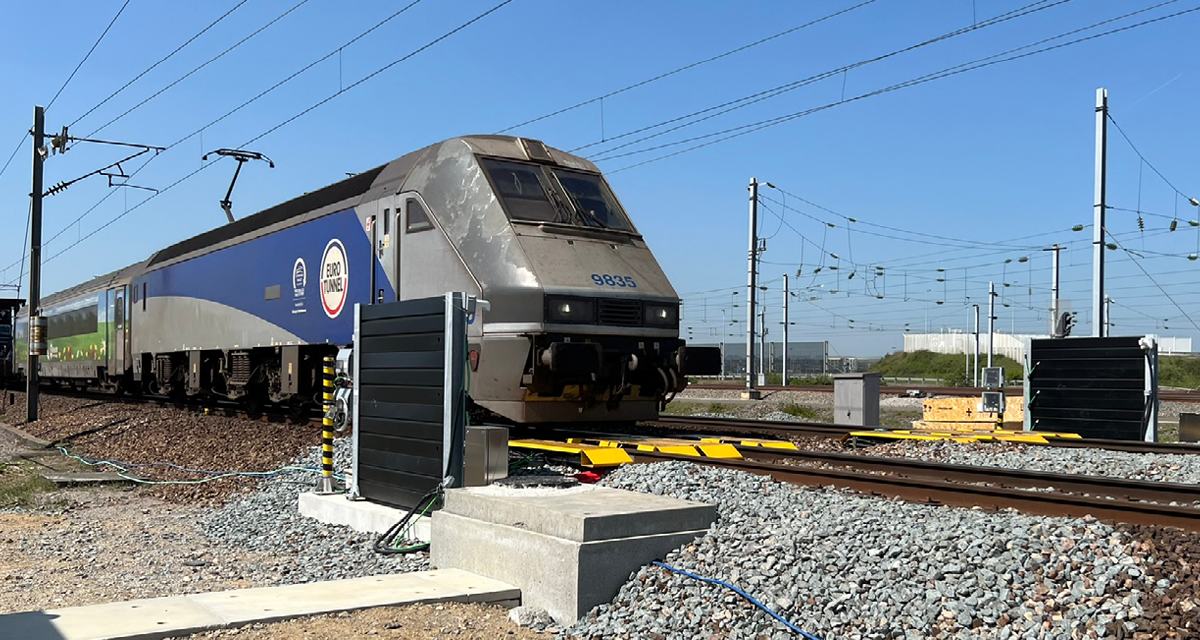
Axle counting adds fail-safe control to laser diagnostics

Train DetectionFinland
Kokkola

Train DetectionIndia
Ensuring reliable rail operations across India´s longest rail-road bridge